
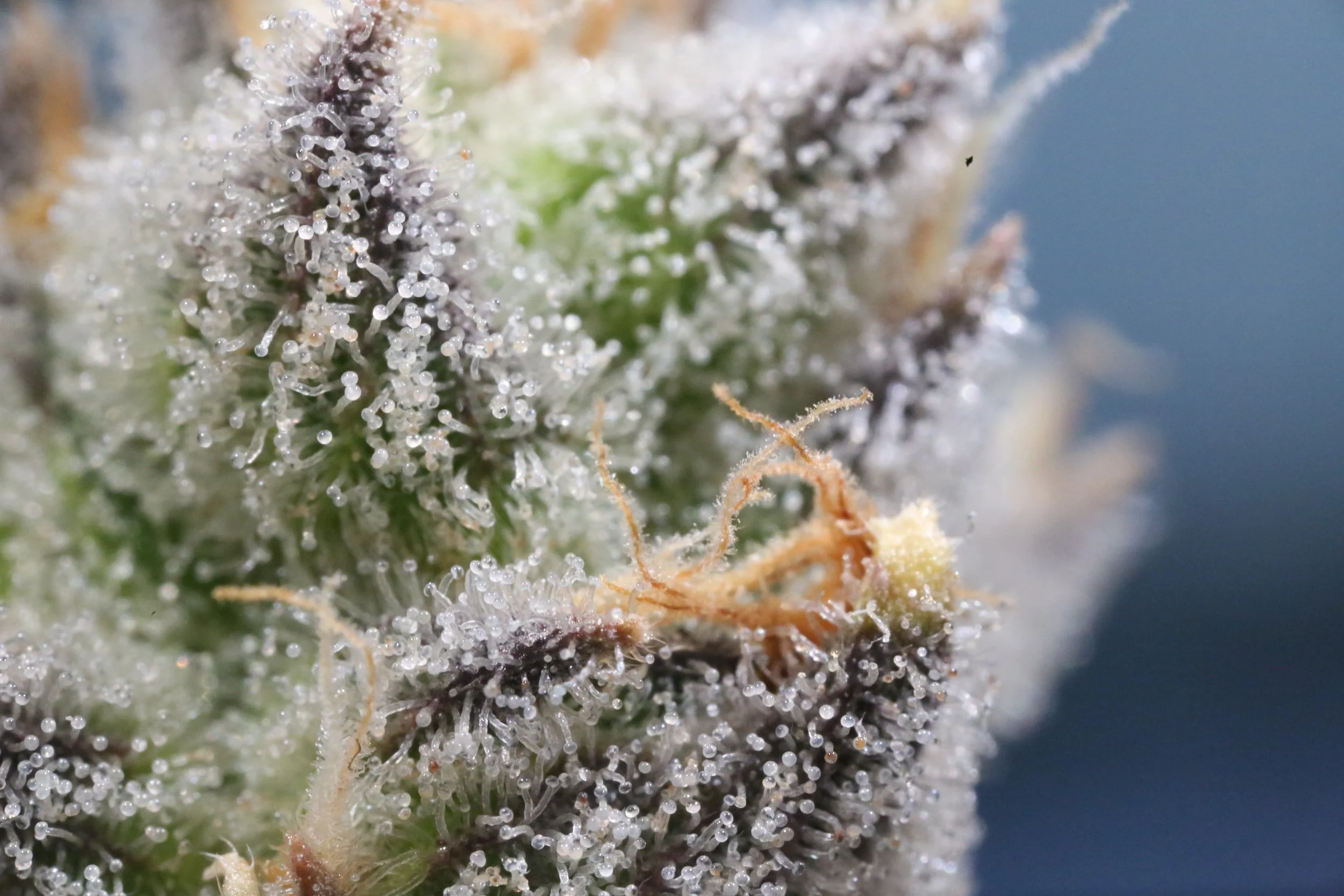
Why Cannabis?
A Somatic Psychedelic Within a Therapeutic Framework
Cannabis holds a unique place in psychedelic psychotherapy
In addition to widespread legality and accessibility, it offers something distinct: it keeps the body online.
Where some psychedelic experiences can propel awareness upward or outward, cannabis draws attention inward — toward sensation, memory, and the subtle language of the nervous system. It allows expanded perception without severing relational presence.
In our work, cannabis is understood as a somatic psychedelic, an embodiment ally.
-
Cannabis and the body
Our bodies hold experience.
Stress, trauma, joy, grief — all of it lives not only in thought, but in tissue, breath, and autonomic response.
Cannabis interfaces directly with the body’s endocannabinoid system, a regulatory network involved in mood, sleep, appetite, immune modulation, and nervous system balance. This system supports homeostasis — the body’s capacity to recalibrate.
When engaged intentionally and skillfully, cannabis can:
Soften protective bracing
Increase interoceptive awareness
Heighten emotional access
Support relaxation without dissociation
Rather than overriding the body, it can help reveal what the body has been holding.
-
Cannabis is psychedelic.
The word psychedelic means “mind-manifesting.” Cannabis, at therapeutic doses, can expand perception and bring previously unconscious material into awareness — not only cognitively, but somatically.
Unlike some medicines that rapidly dissolve ego structure, cannabis often allows expanded awareness while preserving agency. Clients remain able to speak, track, pause, and collaborate. This relational continuity is clinically significant.
This does not mean cannabis is mild.
In the right container, it can be profound.
But its versatility — across lower and higher dose ranges — allows the experience to be titrated carefully according to your nervous system’s readiness.
Depth is not forced. It is invited. Consensual.
-
Cannabis within a psychedelic framework
Cannabis aligns naturally with a portal-based, somatically grounded methodology.
It allows for:
Gradual deepening
Repeated sessions within a therapeutic arc
Integration that begins during the experience
Emotional release without total disorientation
It is adaptable.
It is relational.
It is body-centered.
When combined with breathwork, somatic awareness, and structured integration, cannabis becomes a powerful tool for reorganizing long-held patterns while maintaining safety and continuity.
-
The endocannabinoid system
The endocannabinoid system was discovered after researchers isolated THC and observed that it binds to receptors already present throughout the brain and body. We produce our own cannabinoids — including anandamide, often referred to as the “bliss molecule” — which help regulate balance across multiple physiological systems.
Chronic stress and trauma can disrupt this regulatory capacity.
Cannabis does not create something foreign. It interacts with a system that already exists within you.
Used intentionally and within a therapeutic container, it can support emotional regulation, decrease hyperarousal, and increase embodied awareness — all of which create fertile ground for meaningful psychological work.
-
In holistic psychotherapy
Holistic psychotherapy views you as a whole person — not a collection of symptoms.
Cannabis is not a cure. It is not a shortcut. It is not a substitute for preparation or integration.
It is one tool — when appropriate — that can support deeper access to material already present within you.
Within a structured therapeutic relationship, it can foster:
Greater self-compassion
Increased emotional clarity
Deeper connection to bodily signals
Expanded creative and spiritual awareness
The medicine may open perception.
The work remains relational.
-
Is cannabis right for everyone?
No medicine is universally appropriate.
Cannabis is powerful precisely because it increases sensitivity — to sensation, memory, emotion, and relational dynamics. For some nervous systems, that sensitivity feels regulating and clarifying. For others, especially without preparation, it can feel disorienting or overstimulating.
In this practice, cannabis consumption is never assumed, or required.
We assess readiness carefully. We consider medical history, mental health history, current life stressors, and nervous system stability. We move slowly. We titrate intentionally. We prioritize safety over intensity.
Sometimes the most skillful decision is not to use cannabis at all.
Ethical, whole person psychedelic care takes discernment.